Creative Learning
Two Ways
(both are important)
LINEAR
Linear classes offer structure, direction, and a clear beginning and end. Students develop an idea, work within a process, and take it from an initial concept to a finished piece of art—something to display at home, exhibit in a gallery, or even bring to market. Along the way, they practice focus, organization, and time management while maintaining creative freedom. They learn to refine ideas, make purposeful decisions, work toward a tangible result, and recognize the practical possibilities of their creative skills. They build executive-function skills and the confidence that comes from seeing an idea through to completion.
NON LINEAR
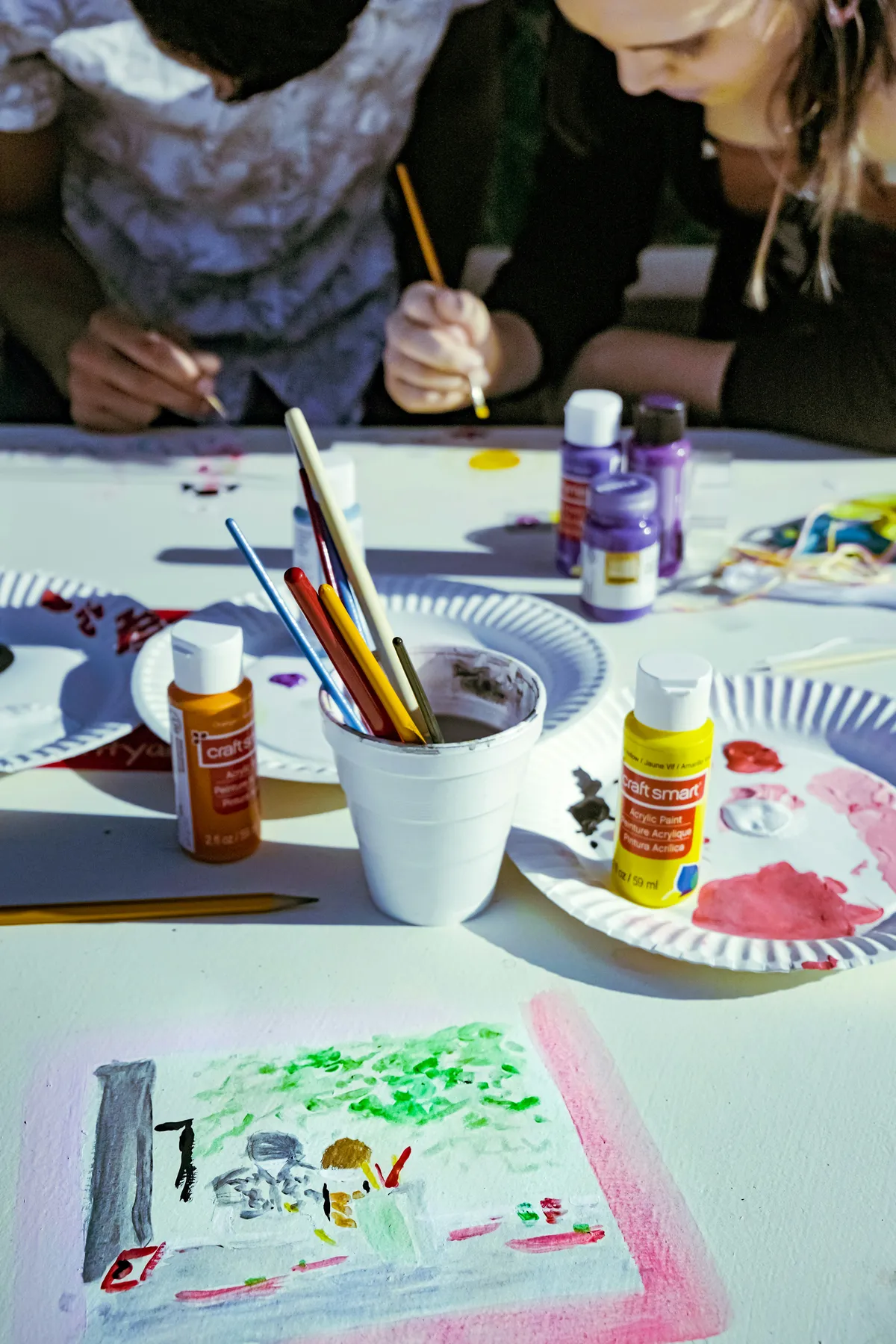
Nonlinear classes invite students to create without rules, following curiosity rather than a predetermined path. There is no prescribed outcome or expectation of finished work. Students explore materials, combine unexpected elements, experiment with processes, and discover what happens when they simply follow an idea. Without the pressure to get something right or finished, they develop flexible thinking, learn to trust their instincts, make unexpected connections, and solve problems (aka puzzles) from new perspectives.
In a future generated by AI, human creativity will be the most valuable currency.
__________________________
Creatives are the keepers of originality, intuition, and authenticity, bringing to life what machines cannot.
__________________________
We are ground zero for the expression of emotion and soul in a world of infinite content.
__________________________
AI isn't automatically the bad guy—it's a powerful tool that, when used thoughtfully, can enhance how we work, solve problems, and navigate everyday life.
THINKING
How we discover, experiment, take risks, and learn through experience.
Reasoning — Analyze information, make connections, evaluate possibilities, and use logic to arrive at thoughtful conclusions.
Experimentation — Test ideas, learn through trial and error, and be willing to fail.
Systems Thinking — Understand how different parts connect and affect one another.
EXPLORING
How we understand, question, connect, and interpret information.
Experimentation — Test ideas, learn through trial and error, and be willing to fail.
Adaptability — Learn new methods and adjust when circumstances change.
Curiosity — Ask questions, investigate possibilities, and remain open to new ideas.
CREATING
How we turn ideas into something tangible.
Decision-Making — Evaluate options and make informed choices.
Independent Thinking — Develop original ideas instead of simply following trends or instructions.
NAVIGATING
How we move confidently through an evolving world.
Self-Directed Learning — Identify what you need to learn and figure out how to learn it.
Digital and AI Fluency — Use technology as a tool- constructively, critically, and responsibly. Learn how to protect your images online.
Developing must have skills for the future. Everyone is creative- all you have to do is discover how you love to express it.